Reading Rivers and Currents
As an Amazon Associate I earn from qualifying purchases.
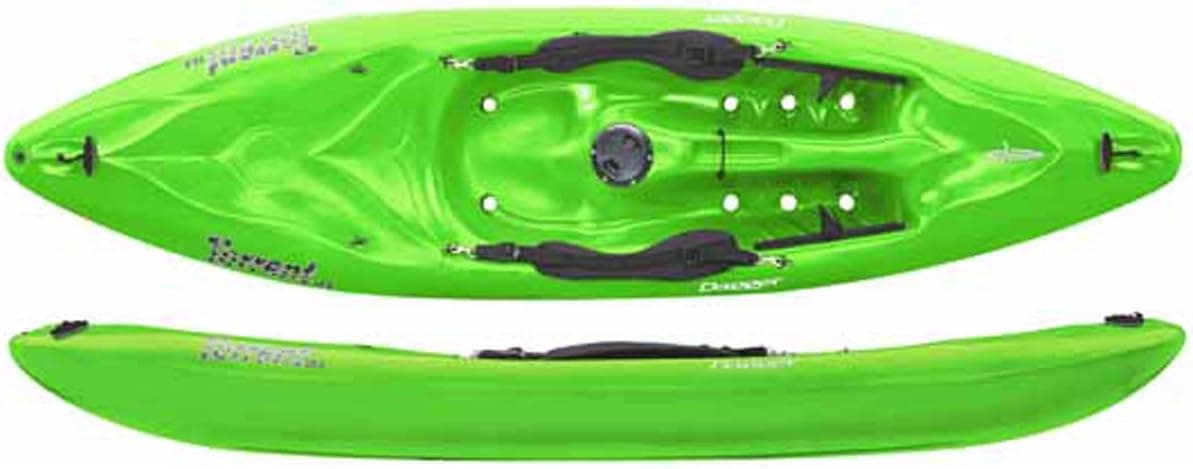
Moving water rewards observation. A river is not a uniform sheet of current; it is a set of predictable patterns created by the riverbed, the banks, and anything sticking out into the flow. Once you can read those patterns, a river stops looking chaotic and starts looking like a route. The skills here apply to gentle class I and II water, which is where most recreational kayakers should stay unless they get proper whitewater instruction.
The fastest water is usually in the deepest channel, and on a bend it swings to the outside. The outside of a bend is where the current undercuts the bank, deposits fallen trees, and pushes boats into obstacles. The inside of a bend is slower and shallower, with gravel bars. As a default, aim for the middle to inside of bends unless you can clearly see the outside is clean. The V-shape of the surface tells you a lot: a downstream-pointing V of smooth water usually marks the deepest clear channel between obstacles, while an upstream-pointing V usually marks water piling against a rock.
Eddies are the most useful feature on any river. Behind a rock, a point, or a bridge pier, the current reverses and forms a pocket of calm or upstream-moving water. Eddies are parking spots. You use them to stop, scout, rest, and regroup. To enter one, aim across the eddy line with some speed, edge the boat downstream slightly as you cross, and let the current spin the bow upstream. To leave, do the same in reverse. The eddy line itself, where fast and slow water meet, is where boats feel squirrelly, so cross it decisively rather than hovering on it.
Ferrying gets you across a current without losing ground downstream. Point the bow upstream at an angle of roughly thirty to forty five degrees toward the bank you want, then paddle forward. The current pushes on the hull and slides you sideways across the river. Steeper angles move you faster but let the current take you downstream more. This one technique solves most of the situations where a beginner ends up somewhere they did not want to be.
The hazards worth taking seriously are specific. Strainers are trees, branches, or fences that let water pass but trap boats and bodies, and they are the most common serious river hazard. Avoid them with plenty of margin, and if you are ever swept toward one while swimming, swim aggressively away, or if contact is unavoidable, go over it head first and climb, not under. Low-head dams and weirs create a recirculating hydraulic that is extremely difficult to escape and should be portaged every single time, no matter how small they look. Foot entrapment is why you never stand up in moving water above knee depth; swim on your back with feet up and downstream instead.
Scout before you commit. If you cannot see the whole way through a rapid or around a blind bend from the water, pull into an eddy and look from shore. Water levels change everything: a river that is friendly at low flow can be pushy and full of new hazards after rain. Check gauge readings if your river has them, and learn what levels correspond to comfortable paddling on your local runs. Higher water also means faster travel and fewer eddies, so trips take less time but leave less margin for error.
Start on gentle water with people who know the run. River kayaking builds on flat-water skills but adds a time element: decisions must be made earlier, because the river keeps moving whether you have decided or not. A helmet, a river-specific PFD, and a throw bag become standard kit once there is any real current. Take a moving water course if you plan to paddle rivers regularly. The techniques are learnable, the hazards are avoidable, and the reward is a kind of paddling where the water does much of the work for you.