Level Six Inflatable Paddle Float with Dual Floats and High-Visibility Reflective Piping for Canoe and Kayak Self-Rescue Review (2026)
Updated September 14, 2026 · Research-based review
Our verdict
Level Six's paddle float uses dual air chambers and reflective piping so a capsized paddler can re-enter a kayak or canoe solo, with a backup chamber if one side loses air. It is a straightforward, well-made self-rescue tool from a respected sea kayaking brand. Trade-off: two chambers take longer to blow up than a single-chamber float.
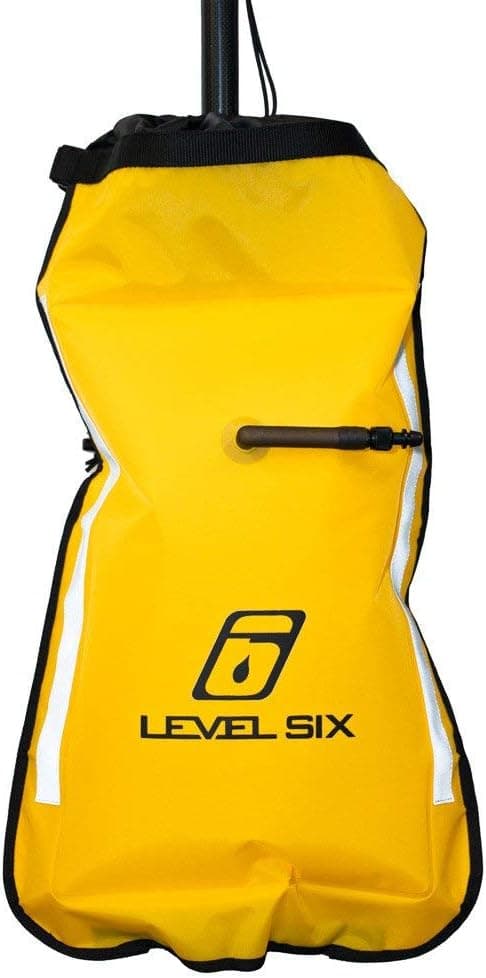
Level Six's inflatable paddle float with dual floats and high-visibility reflective piping for canoe and kayak self-rescue.
Price range: See on Amazon
What we liked
- + Dual floats give a backup chamber if one side loses air
- + Reflective piping adds visibility in low light
- + Level Six is a respected sea kayaking apparel and gear brand
Trade-offs
- - Two chambers take longer to inflate than a single chamber
- - Premium price is higher than budget paddle floats
Who Needs a Paddle Float Like This
A paddle float is core self-rescue gear for anyone who paddles a kayak or canoe beyond wading depth, especially on open water, moving current, or cold water where a capsize needs a fast solo recovery. Level Six built its reputation on sea kayaking apparel and paddling safety gear, so this float targets paddlers who already carry a bilge pump and spray skirt and want a matching-quality float rather than the cheapest option on the shelf. The dual-chamber design specifically suits anyone paddling solo or in small groups where a single point of failure in the flotation could turn a routine self-rescue into a longer swim, which makes it a sensible upgrade for touring and sea kayakers over a basic single-chamber float.
How the Dual Chambers and Piping Work
The float has two separate inflatable chambers rather than one shared bladder, so if a valve or seam on one side lets air out, the second chamber still provides flotation to complete the self-rescue. High-visibility reflective piping is sewn around the float's edge, which helps other boaters or a rescue party spot a paddler in low light or overcast conditions during an on-water incident. A draw cord secures the float over the paddle blade, turning the paddle into an improvised outrigger that the paddler braces against while climbing back onto the kayak, the same basic mechanic used by every paddle float on the market, just built here with sea-kayak-grade materials and stitching.
Packing It and Keeping It Ready
Because the float only works if it is accessible after a capsize, most paddlers store it on deck rigging or in a dedicated deck bag rather than buried in a hatch, and it is worth practicing the full self-rescue sequence in calm, shallow water before relying on it in real conditions. Rinse the float with fresh water after saltwater trips and let both chambers dry fully before rolling it up for storage, since trapped moisture in a folded inflatable can promote mildew over a season. Check the valves periodically for grit or sand, since a fouled valve is the most common reason an inflatable float fails to hold air when it is needed most.
Trade-offs Against Other Rescue Floats
Against a single-chamber float like the NRS Sea Kayak Rescue Paddle Float, this Level Six model takes a bit longer to fully inflate since there are two chambers to blow up by mouth, and it costs more than basic single-chamber or generic inflatable floats from lesser-known brands. In exchange, the redundancy is the main selling point: a single puncture or slow leak on one chamber does not leave the paddler with zero flotation the way it would on a one-chamber design. Compared with budget options that mostly copy the same basic shape, the reflective piping and sea-kayak-grade materials on this Level Six float are the more tangible upgrade for open-water or low-light paddling.
Verdict and Who Should Choose Differently
For sea kayakers, touring paddlers, or anyone who paddles solo on open or cold water, the redundancy of two chambers plus reflective piping makes this a worthwhile safety purchase from a brand paddlers already trust for other gear, matching the site's own score of 8.8 out of 10. Casual paddlers who stay in calm, shallow water close to shore and already paddle in groups may not need the extra chamber and could save money with a simpler single-chamber float instead. Anyone who wants the fastest possible inflation time in an emergency should also compare single-chamber designs, since one bladder is quicker to fill by mouth than two.
Frequently asked questions
Why does a paddle float have two chambers instead of one?
The second chamber is a backup. If one side loses air from a leak or a bad seal on a valve, the other chamber still provides enough flotation to complete a self-rescue.
How do you use a paddle float to re-enter a kayak?
The float slides over one paddle blade and is secured with a draw cord, then the paddle is braced across the back deck as an improvised outrigger the paddler uses to climb back aboard.
Does the float need to be stored somewhere specific?
It should be kept somewhere accessible after a capsize, such as deck rigging or a deck bag, rather than in a hatch where it cannot be reached while in the water.
How long does it take to inflate?
Level Six describes it as easily inflated by mouth, though having two chambers means it takes longer to fully inflate than a single-chamber float.
Prices change often, so check the current price and availability on Amazon.
Check price on AmazonKayak Nest may earn a commission from the link above.