Aqua Bound Manta Ray Fiberglass Kayak Paddle - Fiberglass Shaft/Composite Blade, 4 Piece (Snap Button), Electric Green, 250 cm Review (2026)
Updated September 14, 2026 · Research-based review
Our verdict
The Manta Ray Fiberglass 250 cm suits paddlers in wide sit-on-top or fishing kayaks who want a lighter, more durable step up from an aluminum paddle without paying for carbon. The composite blade is tough and the snap-button ferrule is simple, but feathering is fixed to two angles and the long shaft feels heavy on narrower touring hulls.
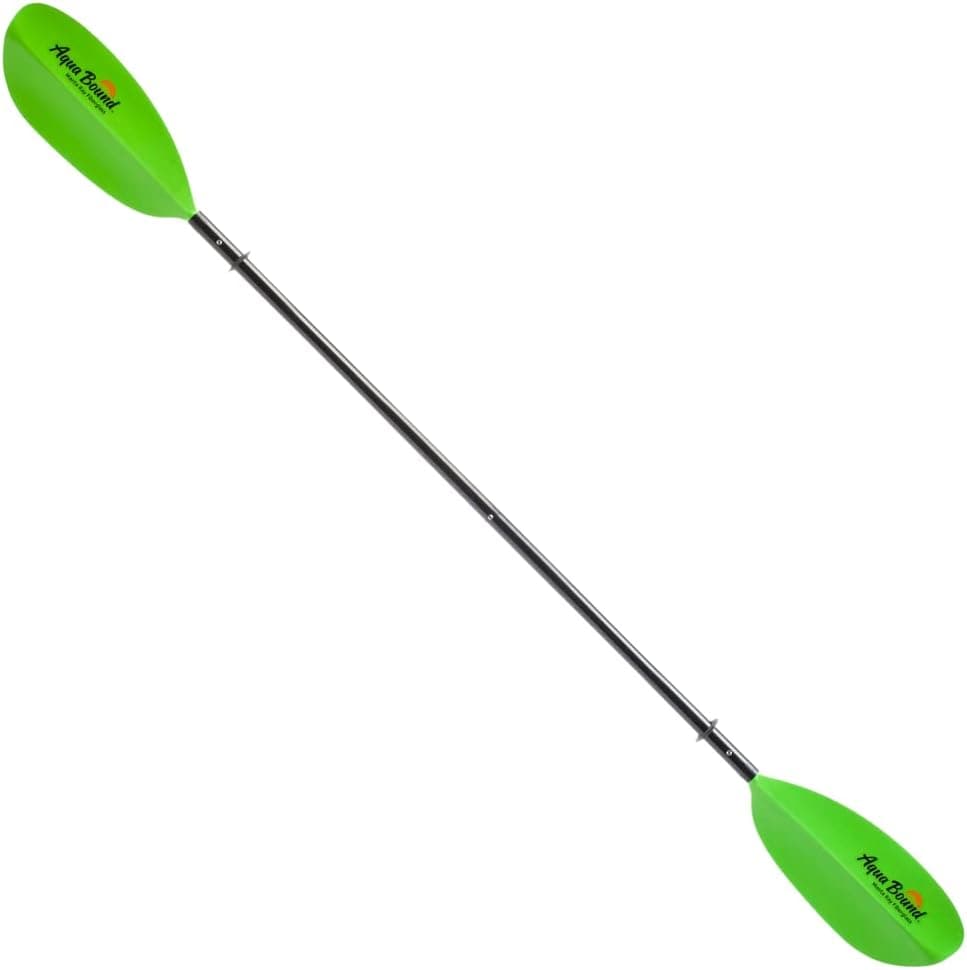
Aqua Bound's Manta Ray Fiberglass in Electric Green at 250 cm, with a composite blade and a 4 Piece snap button build.
Price range: See on Amazon
What we liked
- + Electric Green blades are very easy to spot on deck or in water
- + 250 cm length suits wide kayaks and high-seat fishing boats
- + Fiberglass shaft is a lower-cost step down from carbon
Trade-offs
- - Snap button joints offer fewer feather options than Posi-Lok
- - Long length feels heavy in narrow touring kayaks
Who this paddle is built for
Aqua Bound sells the Manta Ray Fiberglass as a mid-tier paddle, one step above the aluminum-shaft Manta Ray and below the Posi-Lok carbon versions. This 250 cm Electric Green model with the 4 piece snap button joint is aimed at anglers and recreational paddlers who sit high in wide fishing kayaks or pontoon-style sit-on-tops, where a longer shaft is needed to clear the hull and reach the water at a comfortable angle. Shorter paddlers or anyone in a narrow touring kayak will find 250 cm noticeably long, since Aqua Bound sizes this paddle series from 200 cm up to 260 cm in 5 cm steps specifically so buyers can match length to boat width and torso height. The Electric Green blade color is also a practical choice for anglers who want to see their paddle clearly against dark water or a cluttered deck, rather than a purely cosmetic pick.
Blade, shaft and joint explained
The shaft is 100 percent fiberglass, which Aqua Bound positions as lighter and more durable than a commodity aluminum shaft while costing less than a carbon one. The blades use the brand's abXII fiberglass reinforced nylon, a composite that the manufacturer describes as stiffer and more resistant to flex than plain nylon blades, with a blade surface area of about 102.5 square inches over a 7.5 by 18 inch face. Aqua Bound lists the complete paddle weight at roughly 34.5 ounces, average for a fiberglass shaft paddle in this length. The 4 piece snap button design breaks the paddle down into four sections held by two spring-loaded snap buttons at the blade pegs, which locks the shaft at a fixed feather angle of either 0 or 60 degrees for a right or left hand, chosen with a 3 hole ferrule system rather than the infinite adjustment of the pricier Posi-Lok mechanism.
Living with the break-apart design
Breaking down to four short pieces makes this paddle easy to pack into a duffel or backpack, which is the main reason Aqua Bound markets it for backpacking, packrafting and as a compact spare paddle rather than only a primary touring paddle. Assembly means lining up the ferrule holes and pressing until each snap button clicks home, a process that takes a few seconds once you know the orientation. Fiberglass and the reinforced nylon blade material shrug off scrapes against rocks or a kayak hull better than plain nylon, and Aqua Bound backs the paddle with a 2 year manufacturing warranty. Rinsing the ferrules with fresh water after use in salt water helps the snap buttons keep working smoothly over time, since grit in the joint is the most common cause of a sticky break-apart paddle. The paddle is hand built at the company's Osceola, Wisconsin facility.
Trade-offs against rival spare and travel paddles
Against the Werner Powerhouse Fiberglass, a similarly priced 4 piece breakdown paddle, the Manta Ray's snap button ferrule is quicker to assemble but offers only two feather angles rather than a fully adjustable ferrule, so paddlers who like a custom feather setting will notice the limit. Stepping up within Aqua Bound's own range, the Manta Ray Carbon and Manta Ray Hybrid models swap in a Posi-Lok ferrule and carbon components for a lighter swing weight and tool-free length or feather changes, at a real price jump. Compared with a budget travel paddle like the Advanced Elements Packlite, the Manta Ray Fiberglass feels noticeably more solid under load and should hold up better to repeated use, though it is heavier to carry. The 250 cm length is the biggest factor to weigh here, since it favors wide boats over narrow ones regardless of which rival paddle is under consideration.
Verdict and who should look elsewhere
For a wide sit-on-top or fishing kayak where a durable, packable spare or primary paddle is the goal, the Manta Ray Fiberglass in 250 cm earns its our score of 8.4 out of 10 by balancing price, weight and durability better than aluminum paddles while undercutting carbon models. Paddlers in narrow touring or sea kayaks should instead look at a shorter length in this same series, since the shaft length matters more than the material here. Anyone who wants infinitely adjustable feathering for changing wind conditions will be better served by a Posi-Lok paddle such as the Manta Ray Hybrid or Manta Ray Carbon, both of which trade the simple snap button for more on-water tuning. Buyers should also confirm hand dominance before ordering, since the fixed feather angle is set for either right or left hand control at the factory.
Frequently asked questions
What feather angles does the Manta Ray Fiberglass snap button paddle offer?
The 3 hole snap button ferrule locks the blades at 0 or 60 degrees, set up for either a right hand or left hand control paddler, rather than offering infinite adjustment.
How much does the 250 cm Manta Ray Fiberglass weigh?
Aqua Bound lists the complete paddle at about 34.5 ounces, which is typical for a fiberglass shaft paddle of this length.
Can this paddle break down small enough for backpacking?
Yes, the 4 piece snap button design splits the paddle into four short sections that Aqua Bound markets for backpacking, packrafting and use as a compact spare paddle.
Is 250 cm the right length for every kayak?
No, Aqua Bound offers this paddle from 200 to 260 cm in 5 cm increments, and 250 cm is meant for wide sit-on-top or fishing kayaks rather than narrow touring hulls.
Prices change often, so check the current price and availability on Amazon.
Check price on AmazonKayak Nest may earn a commission from the link above.