Aqua Bound Manta Ray Carbon Kayak Paddle - Carbon Shaft/Carbon Blade, 4 Piece (Posi-Lok), Black, 260 cm Review (2026)
Updated September 14, 2026 · Research-based review
Our verdict
The Aqua Bound Manta Ray Carbon at 260 cm pairs a carbon shaft with carbon blades in a four-piece Posi-Lok travel paddle, the lightest Manta Ray here. The length and all-carbon build suit wide fishing kayaks and taller paddlers, but it costs the most among the Manta Ray spares and carbon blades chip more easily on rocks.
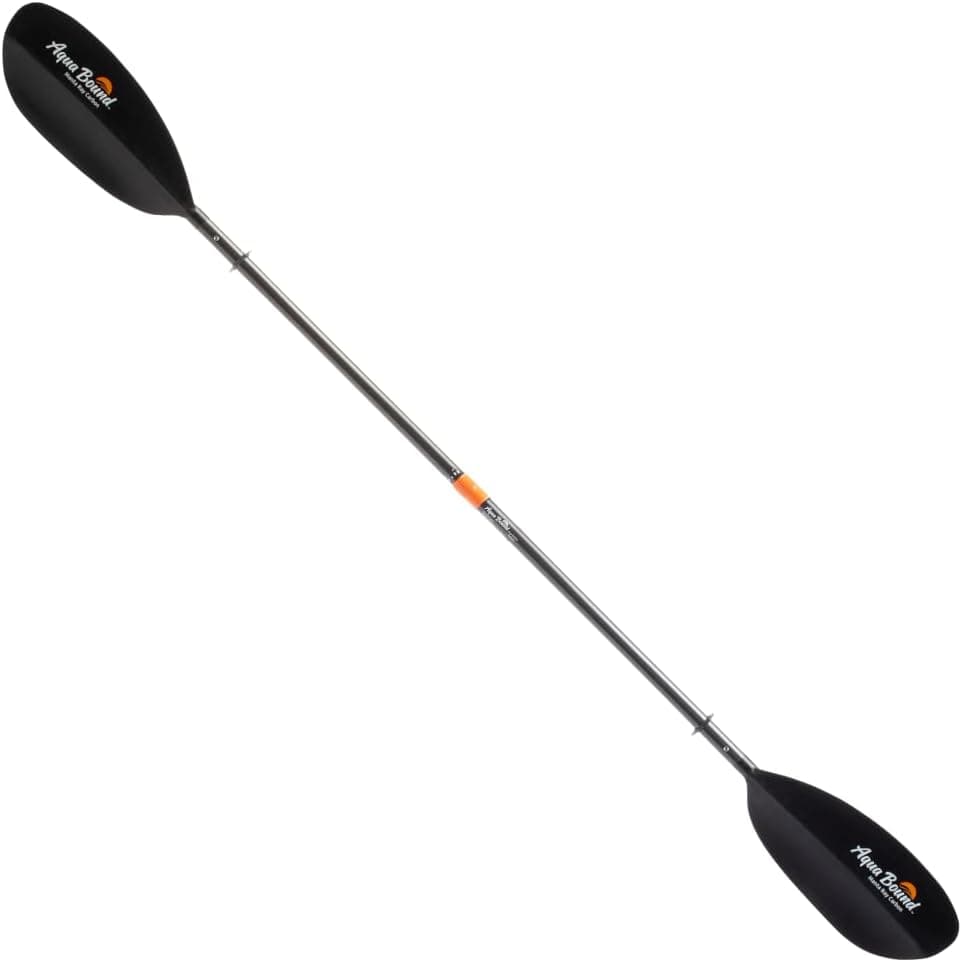
The Aqua Bound Manta Ray Carbon at 260 cm, with carbon shaft and carbon blades in a 4 Piece Posi-Lok black paddle.
Price range: See on Amazon
What we liked
- + Full carbon shaft and blades make it the lightest Manta Ray here
- + 260 cm length fits wide fishing kayaks and tall paddlers
- + Posi-Lok joints stay tight across all four sections
Trade-offs
- - Highest price among the Manta Ray spares in this guide
- - Carbon blades are more vulnerable to rock chips
Who the 260 cm carbon Manta Ray is for
At 260 cm, this is a long paddle even by touring standards, built for wide fishing kayaks where the paddler sits far above and away from the water, or for taller paddlers who need extra reach to clear a beamy hull without hitting their knuckles on the gunwale. Aqua Bound designs the Manta Ray for high-angle paddling, a stroke style common among kayak anglers who want quick, powerful strokes to maneuver around structure. Because full carbon construction makes this the lightest Manta Ray configuration at 29.75 ounces, it is also a sensible choice for anyone who wants the least fatigue possible on long days on the water, whether fishing or covering distance.
Full carbon shaft and blades explained
Unlike the reinforced-nylon-bladed Manta Ray, this version uses carbon blades from tip to tip along with the same 100 percent carbon, ovalized shaft, which is what makes it the lightest paddle in the Manta Ray lineup. Blade surface area runs about 102.5 square inches in the same oversized shape Aqua Bound uses across the Manta Ray family, sized to deliver strong boat control and quick maneuverability for anglers working tight spots. The four-piece Posi-Lok ferrule system adjusts feather angle in 15 degree increments and is built from fiberglass composite for durability, while snap-button joints at each break point are designed to feel as tight and secure as a two-piece paddle once assembled.
Living with a full carbon paddle on the water
The weight saving from full carbon blades is real and noticeable over a full day of paddling or fishing, but it comes with a trade-off: carbon blades are more prone to chipping or cracking from hard strikes against rocks, docks or shallow bottom than the reinforced nylon blades on other Manta Ray models. That makes this paddle better suited to open water, deeper fishing spots and touring than rocky shallow rivers. As with any Posi-Lok paddle, rinsing the ferrule joints after saltwater use and keeping the assembled sections lightly clean prevents grit from interfering with the locking mechanism, and dry, shaded storage protects the carbon finish over years of seasonal use.
Trade-offs against the other Manta Ray spares here
This is the most expensive of the Manta Ray paddles in this guide, a direct result of moving to full carbon blades instead of reinforced nylon or composite. Against the 210 cm nylon-bladed Manta Ray, it trades some blade durability for lower weight and more reach. Against Aqua Bound's Manta Ray Hybrid, which pairs a carbon shaft with a composite blade at a price between the two, this carbon version sits at the premium end of the family. Compared with Werner's fiberglass breakdown paddles, the four-piece Posi-Lok format still packs down smaller for travel, though Werner's blades hold up better to accidental rock contact.
Verdict and who should pick a shorter or cheaper option
For anglers on wide fishing kayaks or taller paddlers who want the lightest possible four-piece paddle, this 260 cm carbon Manta Ray delivers, matching the site's strong 9 out of 10 marks for fit and features. Paddlers on narrower kayaks, or those working shallow, rocky water where blade strikes are common, should consider the reinforced nylon Manta Ray instead to avoid chipping an expensive carbon blade. Budget-conscious buyers who do not need the extra length or the full-carbon weight saving will also get most of the performance from the Hybrid or nylon-bladed versions at a lower price.
Frequently asked questions
Who is the 260 cm length best suited for?
Wide fishing kayaks and taller paddlers who need extra reach benefit most from 260 cm; narrower kayaks or average-height paddlers will usually be better served by a shorter length in the Manta Ray range.
Are carbon blades durable enough for kayak fishing?
They hold up well in open and deeper water but are more prone to chipping from rock or dock strikes than reinforced nylon blades, so treat launches and shallow spots with more care.
How much does this paddle weigh?
About 29.75 ounces (843 grams), making it the lightest configuration in Aqua Bound's Manta Ray line thanks to its full carbon shaft and blades.
Does it pack down for travel?
Yes, it breaks into four pieces using Aqua Bound's Posi-Lok ferrule system, which also lets you adjust feather angle in 15 degree increments.
Prices change often, so check the current price and availability on Amazon.
Check price on AmazonKayak Nest may earn a commission from the link above.