Aqua Bound Manta Ray 4-Piece Posi-Lok Kayak Paddle - 100% Carbon Shaft, Reinforced Nylon Blades, Portable Travel Friendly (210 cm) Review (2026)
Updated September 14, 2026 · Research-based review
Our verdict
The Aqua Bound Manta Ray 4-Piece Posi-Lok at 210 cm is a travel-friendly spare paddle with a carbon shaft and reinforced nylon blades. It breaks into four compact pieces with adjustable Posi-Lok joints, light to carry as a backup, but 210 cm is short for wide recreational or fishing kayaks.
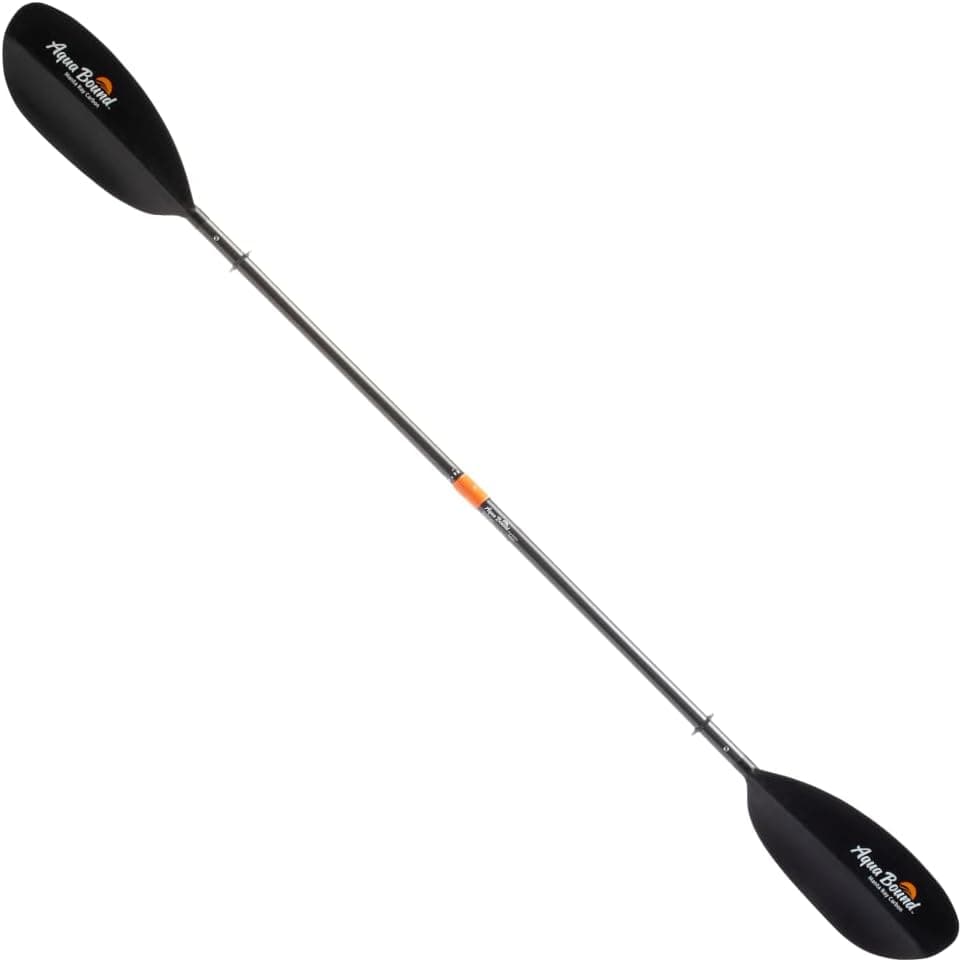
The Aqua Bound Manta Ray 4-Piece Posi-Lok at 210 cm, with a 100% carbon shaft and reinforced nylon blades for travel.
Price range: See on Amazon
What we liked
- + 100% carbon shaft keeps the travel spare light to carry
- + Posi-Lok joints lock firmly and allow feather adjustment
- + Reinforced nylon blades handle knocks better than full carbon
Trade-offs
- - 210 cm is short for wide recreational or fishing kayaks
- - Nylon blades are heavier than the carbon-blade Manta Ray
Who this spare paddle is for
This Manta Ray is built as a take-apart travel and spare paddle rather than a primary touring blade, breaking down into four pieces small enough to fit in a car trunk, plane luggage or a kayak's day hatch. Aqua Bound designs the Manta Ray line for high-angle paddling, which suits flatwater kayaking, packrafting, racing and kayak fishing more than relaxed low-angle cruising. At 210 cm, this particular length sits toward the shorter end of Aqua Bound's 200 to 260 cm range for the Manta Ray, making it best suited to narrower kayaks or as a compact backup rather than a primary paddle for a wide recreational or fishing kayak, where a longer length would track and reach the water more effectively.
Carbon shaft, nylon blades and the Posi-Lok joints explained
The shaft is 100 percent carbon and ovalized where the hands grip, which Aqua Bound uses to cut weight and add comfort over long paddling days while reducing blister risk. The blades are carbon-reinforced nylon rather than full carbon, a deliberate choice for a travel paddle since reinforced nylon tolerates knocks against rocks, docks and shallow launches better than a full carbon blade would. Blade surface area measures about 102.5 square inches, sized for efficient high-angle strokes. The Posi-Lok ferrule system is fiberglass composite and adjusts feather angle in 15 degree increments, and the snap-button joints at each of the four sections are designed to feel tight and secure, similar to a two-piece paddle, once assembled.
Living with a four-piece travel paddle
The main appeal of a four-piece breakdown paddle is portability: it packs into a duffel or day hatch far more compactly than a one or two-piece paddle, which is exactly why many paddlers carry one as an emergency spare strapped to the deck. Assembly and breakdown take a bit more time than a two-piece design, and the added joints are more parts that need periodic rinsing and light lubrication to keep the Posi-Lok mechanism working smoothly, especially after saltwater use. Carbon shafts and reinforced nylon blades both hold up well to UV and water exposure, but dry storage out of direct sun between trips extends the life of the finish and the ferrule seals.
Trade-offs and how it compares to the carbon-blade Manta Ray
Choosing reinforced nylon blades over Aqua Bound's full carbon Manta Ray Carbon means slightly more weight in the blade but better resistance to chips and cracks from rock strikes, a reasonable trade for a spare paddle that may see rougher handling than a primary blade. Against Aqua Bound's own Manta Ray Hybrid, which pairs a carbon shaft with a composite blade, this nylon-bladed version sits a notch below in refinement but typically costs less. Compared with Werner's fiberglass breakdown paddles, the Manta Ray's four-piece Posi-Lok format packs down smaller, which matters more for travel and emergency-spare use than for everyday primary paddling.
Verdict and who should pick a different length
This 210 cm Manta Ray 4-Piece earns its spot as a compact, genuinely portable spare or travel paddle, backed by the site's fit and features scores of 9 out of 10. It works best in narrower kayaks or as a backup strapped to the deck of a wider boat, matching the site's own note that 210 cm runs short for wide recreational or fishing kayaks. Paddlers who need a paddle sized for a beamy fishing kayak should look at a longer length in the same line, such as the 260 cm carbon-blade version, rather than sizing down to this one.
Frequently asked questions
Is 210 cm long enough for a wide fishing kayak?
Usually not as a primary paddle. This length suits narrower kayaks or works well as a compact spare; wide recreational or fishing kayaks generally need a longer length in Aqua Bound's 200 to 260 cm range.
Why choose reinforced nylon blades over carbon blades?
Reinforced nylon blades tolerate knocks against rocks and shallow launches better than full carbon, which is why Aqua Bound offers this version alongside its all-carbon Manta Ray as a tougher, less fragile option.
How does the four-piece breakdown work?
The paddle splits into four sections that lock together with Aqua Bound's Posi-Lok fiberglass composite ferrules, which also adjust feather angle in 15 degree increments once assembled.
Is this paddle meant to be a primary paddle or a spare?
It works as either, but its compact four-piece breakdown and shorter 210 cm length make it especially popular as a travel-friendly spare paddle carried as a backup.
Prices change often, so check the current price and availability on Amazon.
Check price on AmazonKayak Nest may earn a commission from the link above.