Fishing From a Kayak
As an Amazon Associate I earn from qualifying purchases.
Fishing from a kayak gets you into shallow, quiet water that boats cannot reach and shore anglers cannot cast to. It also adds a layer of complexity, because you are simultaneously operating a paddle, a rod, and a small amount of tackle in a boat that responds to every shift of your weight. Setting up sensibly makes the whole thing calm rather than chaotic.
Most dedicated fishing kayaks are sit-on-tops, and for good reason. They are wide, stable, self-draining, and offer open deck space for rod holders, tackle crates, and fish. Many are stable enough to stand in, which helps with sight fishing and casting, though standing raises your centre of gravity considerably and should be practised in calm shallow water first. Pedal drive kayaks are popular because they free your hands entirely, and they are excellent for covering water, though they add weight, cost, and draft.
Rigging should start minimal. Two rod holders behind the seat, one within reach, a small crate for tackle strapped in the rear well, a net, pliers, and a measuring device cover most fishing. Resist the urge to bolt on everything at once. Every item on deck is something to snag a line, catch wind, or lose overboard. Leash the things that would hurt to lose: rods, the paddle, the net, and any electronics. A paddle leash in particular is essential, because the moment a fish takes you will put the paddle down without thinking.
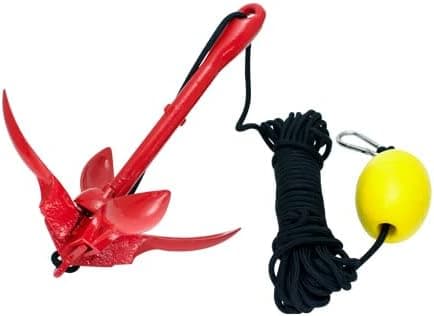
Wind and drift management are the real skills of kayak fishing. A kayak is light and sits high, so it moves with the wind constantly. A drift chute or small sea anchor slows that drift and holds the boat at a workable angle, which is often better than anchoring. If you do anchor, use an anchor trolley so the anchor line can be moved to the bow or stern. Never anchor from the side in current or wind, because the boat can be pulled broadside and swamped. In any current, keep a knife where you can reach it with either hand so you can cut the anchor line instantly.
Safety kit is the same as any paddling day, plus a few extras. Wear your PFD, because a fishing-specific vest with pockets is comfortable enough to keep on all day. Carry a whistle, a light if you might be out at dusk, and a phone in a waterproof case. Dress for the water, since anglers sit still for long periods and get cold faster than paddlers who keep moving. Tell someone where you are going and when you expect back, and be extra clear about this if you fish alone, which most kayak anglers do.
Handling fish in a kayak takes practice. Keep your movements low and centred, and bring the fish alongside rather than lifting it over your head. Use a net for anything sizeable, and unhook fish with pliers with the fish either in the net alongside or laid on the deck between your legs. For fish with teeth or spines, a grip tool is worth carrying. If you keep fish, plan where they go before you catch one: a cooler bag strapped down, an insulated fish bag, or a well if your boat has one.
Respect the local rules and other water users. Licences, seasons, size limits, and protected areas all apply exactly as they do from a boat or the bank. Give shore anglers and moored boats a wide berth, do not drift lines through other people's water, and keep clear of navigation channels. Kayak anglers are quiet, low impact, and often welcome where motorboats are not, and keeping that reputation is worth a little extra courtesy on the water.