Thule DockGlide Kayak Roof Rack Saddle, Carries Kayaks up to 36 inch Wide, 75 lb Capacity Review (2026)
Updated September 14, 2026 · Research-based review
Our verdict
A premium saddle-style kayak carrier from Thule, rated for kayaks up to 36 inches wide and 75 pounds, with pivoting pads that help slide the hull up from behind. It needs a matching crossbar system and costs more than generic J-cradles, but the fit and one-person loading make it worth it for wider fishing kayaks.
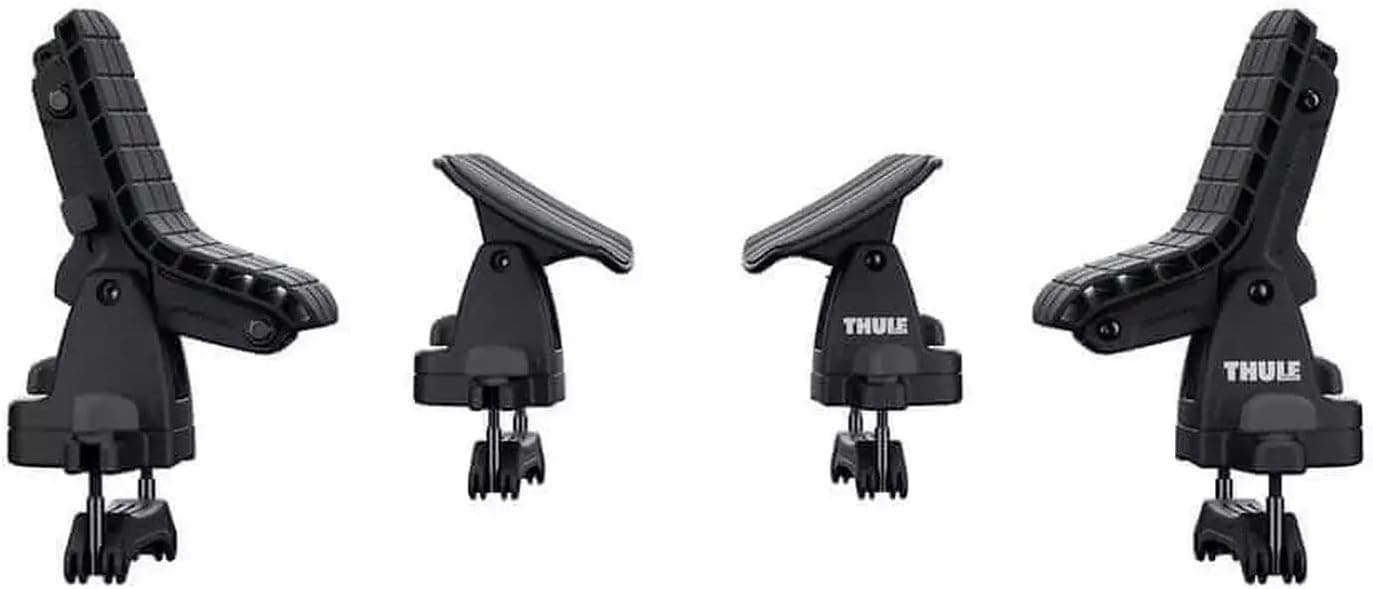
Thule's DockGlide kayak roof rack saddle, carries kayaks up to 36 inch wide with a 75 lb capacity.
Price range: See on Amazon
What we liked
- + 75 lb capacity and 36 inch width limits are clearly stated
- + Glide pads help slide the kayak onto the roof from behind
- + Thule is a premium roof rack brand with fitted accessories
Trade-offs
- - Saddles need a matching crossbar system to mount
- - Premium Thule price is higher than generic carriers
Who the DockGlide is for
The DockGlide targets paddlers with wider fishing kayaks or hybrid hulls that do not sit well in a narrow J-cradle, since the two pivoting saddles adjust to fit a wide range of hull shapes rather than forcing the boat onto its side. Thule rates it for kayaks up to 36 inches wide and 75 pounds, which covers most sit-on-top fishing kayaks and many recreational touring boats, though it will not suit tandem or heavier fishing kayaks that exceed that weight. It also suits paddlers who load and unload solo, since the flat saddle design lets you slide the kayak up from behind rather than lifting it sideways onto a J-bar.
How the saddle system and glide pads work
Instead of a fixed J-shaped cradle, the DockGlide uses two independent pivoting saddles with an angle-setting lever, so each saddle rotates to match the actual curve of the hull resting on it rather than forcing a single angle on every boat shape. Large, flexible, cushioned pads sit under the hull and are designed to let the kayak glide up into position from behind the vehicle, which is the main advantage over a static foam block or J-cradle for solo loading. Once seated, center load straps with car-protective buckle bumpers secure the boat across the middle, and Thule's QuickDraw bow and stern tie-downs anchor the ends to the vehicle for highway stability.
Setting it up and using it day to day
The DockGlide mounts to Thule crossbars or a compatible bar system rather than clamping directly to a bare roof, so it is not a standalone kit for vehicles without bars already installed. Once mounted, everyday loading is close to one motion, sliding the kayak up the pads from the rear bumper area, letting the pivoting saddles settle to the hull shape, then cinching the center strap and bow-stern tie-downs. Because the pads are cushioned rather than hard plastic, they are gentler on gelcoat and rotomolded plastic hulls than uncovered J-bars over repeated loadings. Regular inspection of the pad surfaces and straps for wear is worth doing each season, since they are the parts in direct contact with the boat.
Trade-offs and how it compares with rival carriers
Against Thule's own 895 DockGrip, which rates higher at 85 pounds and works across all hull shapes with a simpler fixed cradle, the DockGlide trades some capacity for the pivoting, glide-up loading style that favors solo paddlers with wider hulls. Compared with a budget J-bar rack like the AA-Racks stainless steel carrier or the ARTIPOLY two-kayak rack, the DockGlide costs noticeably more and requires a Thule-compatible crossbar system, but the padded, pivoting saddles are gentler on the hull and easier to load solo than a fixed J-cradle. Paddlers who own narrower touring kayaks and do not need solo loading may find a standard J-cradle a better value.
Verdict: who should buy it and who should skip it
Buy the DockGlide if you paddle a wider fishing or hybrid kayak up to 36 inches wide and 75 pounds, load and unload solo, and already run Thule crossbars or are willing to invest in a compatible bar system. The pivoting saddles and glide-up loading are the main reasons to pick this over a cheaper J-cradle. Skip it if your kayak exceeds 75 pounds, since the Thule 895 DockGrip rates higher, or if you are on a tight budget and your boat is narrow enough to sit securely in a standard J-cradle, where a generic rack will save real money for a similar result.
Frequently asked questions
What size kayak does the Thule DockGlide fit?
It is rated for kayaks up to 36 inches wide and 75 pounds, which covers most sit-on-top fishing and recreational kayaks.
Does the DockGlide work with any crossbars?
It mounts to Thule crossbars or a compatible bar system rather than clamping to a bare roof, so you need bars already installed to use it.
Can one person load a kayak onto the DockGlide alone?
Yes, the flat pivoting saddles are designed to let the kayak glide up into position from behind the vehicle, which makes solo loading easier than with a fixed J-cradle.
How is the DockGlide different from the Thule 895 DockGrip?
The DockGrip rates higher at 85 pounds and uses a simpler fixed cradle for all hull shapes, while the DockGlide uses pivoting saddles better suited to wider hulls and solo glide-up loading.
Prices change often, so check the current price and availability on Amazon.
Check price on AmazonKayak Nest may earn a commission from the link above.