Werner Paddles Camano Carbon Bent 2pc Standard Kayak Paddle, 240 cm Review (2026)
Updated September 14, 2026 · Research-based review
Our verdict
The Werner Camano Carbon Bent at 240 cm is a low-angle touring paddle built for wider recreational and light touring kayaks, or taller paddlers who need extra reach. Its carbon shaft and blades trim weight over the fiberglass Camano, but the upgrade costs noticeably more and this length can feel oversized in a narrow sea kayak.
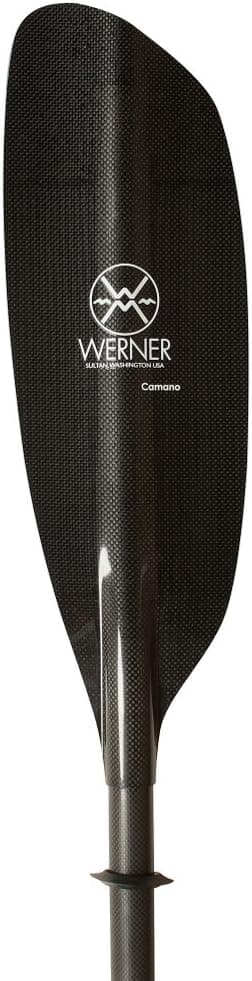
The Werner Camano Carbon Bent 2pc standard paddle at 240 cm, a light carbon paddle for wider kayaks and relaxed touring.
Price range: See on Amazon
What we liked
- + 240 cm length suits wider rec and light touring kayaks
- + Carbon shaft trims weight over the fiberglass Camano
- + Bent shaft reduces fatigue for paddlers with sore wrists
Trade-offs
- - Significant price step up from the fiberglass Camano
- - Longer length can feel too much in narrow sea kayaks
Who the 240 cm Camano Carbon is for
Werner builds the Camano as a low-angle touring paddle, meaning a more upright shaft position and a relaxed cadence suited to cruising rather than aggressive high-cadence strokes. The 240 centimeter length in this listing is toward the long end of Werner's range for the Camano, which typically spans roughly 210 to 240 centimeters, making it the right call for wider recreational and light touring kayaks or for taller paddlers who need more reach to clear a beamy hull. Paddlers in narrow sea kayaks or with a shorter torso will usually find a shorter length in the same line more efficient. Anyone who prefers a quicker, high-angle stroke for fitness paddling or open-water conditions should look at Werner's high-angle options, like the Shuna, instead.
Carbon shaft, blade design and what the bent shaft changes
This paddle pairs a carbon shaft and carbon blades, which Werner lists at around 792 grams, its lightest Camano configuration and a meaningful drop from the fiberglass version. The mid-size blades measure roughly 16.5 by 52 centimeters with about 650 square centimeters of surface area, sized to fit a wide range of paddler strengths rather than favoring only powerful strokes. Werner's dihedral blade shape is designed to reduce flutter and track smoothly through the forward stroke, which matters more on a long touring paddle than raw power does. The neutral bent shaft angles the grip sections to keep wrists in a more natural position, reducing the fatigue and soreness that a straight shaft can cause over hours of paddling.
Living with the paddle day to day
The Camano Carbon breaks into two pieces via Werner's Smart-View adjustable ferrule, which lets a paddler dial in feather angle and packs down smaller for transport or storage than a one-piece paddle. Because it is a premium carbon paddle rather than a budget aluminum or fiberglass one, a fresh water rinse after saltwater use and dry, shaded storage will protect the finish and the ferrule mechanism over repeated seasons. Carbon blades are efficient and light but less forgiving of hard strikes on rocks or shallow launches than reinforced plastic blades, so this paddle suits open water and touring more than rocky rivers. Confirming the right length against your kayak's width and your own height before buying matters more than any other single choice with this paddle.
Trade-offs against the Shuna and Aqua Bound alternatives
Stepping up from Werner's fiberglass Camano to this carbon version brings a real weight saving but also a significant price increase, so paddlers who paddle occasionally may not recoup that cost in comfort. Compared with Werner's own Shuna, a high-angle touring paddle, the Camano's low-angle, relaxed-cadence design suits cruising and fishing more than fast-paced mileage days. Against Aqua Bound's carbon options, like the Manta Ray Carbon and Sting Ray Carbon lines, the Camano's larger blade surface area favors wider, slower-moving kayaks, while Aqua Bound's Posi-Lok paddles offer easier take-apart travel in three or four pieces rather than two.
Verdict and who should pick a different option
This 240 centimeter Camano Carbon Bent earns its spot for paddlers with wide recreational or light touring kayaks, or taller paddlers, who want a relaxed low-angle stroke without the weight of a fiberglass shaft, matching the site's build score of 10 out of 10. It is the wrong choice for narrow sea kayaks, where the extra length will feel unwieldy, and for paddlers who want a quicker high-angle cadence, who should look at the Shuna instead. Budget for the price step up from fiberglass, and double-check length against your kayak's beam before ordering.
Frequently asked questions
Is 240 cm the right length for my kayak?
It suits wider recreational or light touring kayaks and taller paddlers; narrower sea kayaks generally call for a shorter length in Werner's roughly 210 to 240 centimeter range for the Camano.
How much lighter is the carbon Camano than the fiberglass version?
Werner lists this carbon configuration at around 792 grams, its lightest Camano build, a noticeable drop from the fiberglass shaft version, though it costs more.
Is the Camano a high-angle or low-angle paddle?
It is a low-angle touring paddle designed for a relaxed, upright cruising stroke, unlike Werner's Shuna, which targets a quicker high-angle cadence.
Does the feather angle adjust?
Yes, it uses Werner's Smart-View adjustable ferrule, which sets feather angle and splits the paddle into two pieces for transport.
Prices change often, so check the current price and availability on Amazon.
Check price on AmazonKayak Nest may earn a commission from the link above.