AQUA BOUND Sting Ray Carbon Kayak Paddle, Carbon Shaft and Carbon Blade, 2 Piece Posi-Lok, 210 cm Review (2026)
Updated September 14, 2026 · Research-based review
Our verdict
The Sting Ray Carbon at 210 centimeters suits touring paddlers who want a light, low angle paddle with a carbon shaft and a secure Posi-Lok ferrule for feathering. Its main strength is low weight, while the 210 centimeter length works best on narrower kayaks and can feel short on wide recreational hulls.
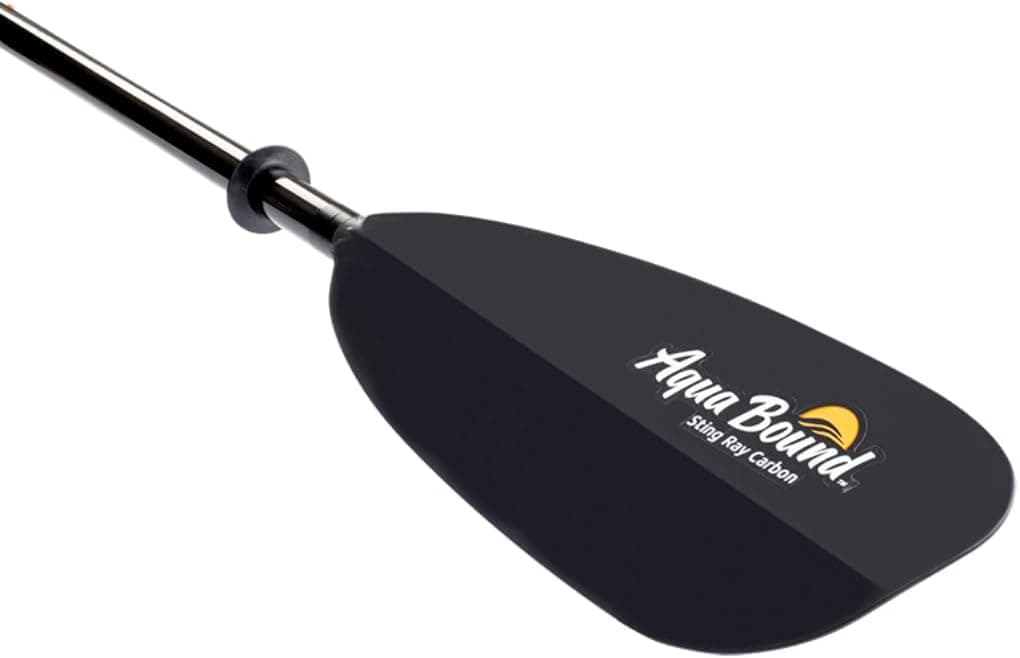
AQUA BOUND Sting Ray Carbon at 210 cm, with carbon shaft and carbon blades and a 2 Piece Posi-Lok ferrule.
Price range: See on Amazon
What we liked
- + Carbon shaft with carbon reinforced nylon blades keeps swing weight low
- + Posi-Lok ferrule allows secure length and feather adjustment
- + 210 cm length suits narrow touring kayaks and high-angle strokes
Trade-offs
- - Short length can feel cramped in wide recreational kayaks
- - Carbon blades cost more to replace if you crack one on rocks
Who this paddle is for
This is a touring style paddle meant for paddlers who cover real distance and feel every extra ounce over a multi hour day, rather than someone making short trips around a pond. The 210 centimeter length is on the shorter end of Aqua Bound's range, which suits narrower touring and sea kayaks paddled with a higher stroke cadence, and taller paddlers or those in wide, beamy recreational kayaks will usually want a longer size instead. Aqua Bound sells the Sting Ray Carbon from 200 to 260 centimeters in 5 centimeter steps, so it is worth checking your kayak's width and your own height against the sizing chart before choosing 210.
Shaft, blade and ferrule explained
The shaft is built entirely from carbon fiber in an ovalized shape, which Aqua Bound designs for a comfortable grip and a flutter free forward stroke. The blades use the company's abX Carbon Reinforced Nylon, a composite that blends carbon reinforcement into an injection molded blade rather than a solid carbon fiber layup, which keeps cost down while still landing among the lightest blades Aqua Bound offers. Each blade measures about 6.5 by 18 inches for roughly 92.5 square inches of surface area, a mid size shape suited to a relaxed, low angle touring stroke rather than aggressive whitewater or racing strokes. Total paddle weight is about 28.75 ounces.
Living with the Posi-Lok ferrule
The two piece design breaks down at a Posi-Lok ferrule, which locks the halves together with a dual button release and adjusts feather angle in 15 degree increments on either side, so you can match the blade offset to your own wrist comfort or switch it for a paddling partner. The ferrule uses a corrosion resistant composite construction rather than exposed metal parts, which matters for anyone paddling in salt water where hardware corrosion is a common complaint on cheaper paddles. Day to day care is simple, a fresh water rinse after saltwater use and keeping sand out of the ferrule joint is enough to keep it locking cleanly season after season.
How it compares with other carbon paddles
Against the Werner Shuna, a bent shaft carbon paddle from a rival brand, the Sting Ray Carbon's straight ovalized shaft is simpler and generally lighter, while the Shuna's bent shaft can reduce wrist strain over very long days for some paddlers. Within Aqua Bound's own range, the 4 Piece Posi-Lok version of this same Sting Ray Carbon breaks down smaller for travel or storage in a small boat, at a small weight penalty over this 2 piece build. Paddlers who want a true full carbon blade rather than a carbon reinforced composite should expect to pay more for Aqua Bound's higher end Carbonlite models or a competing all carbon layup paddle.
Verdict and who should size differently
Choose the Sting Ray Carbon 210 centimeter if you paddle a narrower touring or sea kayak, want a light carbon shaft with adjustable feathering, and prefer a mid size low angle blade over an aggressive high angle shape. It is a strong pick for anyone upgrading from a heavier aluminum or fiberglass paddle who feels fatigue on longer trips. Paddlers in wide recreational kayaks, taller paddlers, or anyone who prefers a longer reach should size up within Aqua Bound's 200 to 260 centimeter range rather than default to 210, and paddlers who need a fully compact travel paddle should look at the 4 piece version instead.
Frequently asked questions
Is the blade on the Sting Ray Carbon solid carbon fiber?
No, the shaft is 100 percent carbon but the blades are Aqua Bound's abX Carbon Reinforced Nylon, a carbon reinforced composite rather than a solid carbon layup, according to the manufacturer's own spec page.
What length should I choose for a wide recreational kayak?
210 centimeters suits narrower touring kayaks best. Wider recreational hulls usually call for a longer size within Aqua Bound's 200 to 260 centimeter range.
How does the Posi-Lok ferrule work?
It locks the two paddle halves together with a dual button release and lets you set the feather angle in 15 degree increments on either side to match your stroke.
Is this paddle suitable for saltwater use?
Yes, the Posi-Lok ferrule uses corrosion resistant composite construction, though a fresh water rinse after saltwater trips is still good practice for any paddle.
Prices change often, so check the current price and availability on Amazon.
Check price on AmazonKayak Nest may earn a commission from the link above.