Werner Shuna Carbon Bent Shaft Kayak Paddle Review (2026)
Updated September 14, 2026 · Research-based review
Our verdict
The Werner Shuna Carbon is a premium bent shaft touring paddle for skilled paddlers who want an efficient, low-fatigue high-angle stroke over long days. Full carbon construction keeps swing weight down, but it is one of the pricier paddles in this guide and length must be chosen carefully since it is not printed in the title.
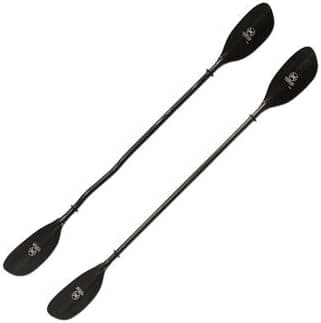
Werner's Shuna carbon bent shaft kayak paddle, a premium touring paddle for experienced paddlers covering long distances.
Price range: See on Amazon
What we liked
- + Carbon construction keeps weight low for all-day touring comfort
- + Bent shaft angle supports a relaxed wrist on long strokes
- + Shuna blade shape suits efficient, higher-cadence touring strokes
Trade-offs
- - One of the most expensive paddles in this guide
- - Measure your torso and boat width to pick the right paddle size
Who the Shuna is designed for
Werner positions the Shuna as a paddle for skilled, average-strength kayakers who want an efficient, easy-to-handle high-angle paddle rather than a beginner's all-purpose stick. High-angle technique means a steeper shaft angle and quicker cadence, common among touring paddlers covering real mileage, fitness paddlers and those who paddle in rougher coastal conditions where a faster stroke rate helps punch through chop. The mid-size blades on the Shuna are built to suit a wide range of paddler strengths rather than only the most powerful athletes, which is why Werner also frames it as suitable for general touring, not just racing. Paddlers who prefer a relaxed, low-angle cruising stroke, or who are new to kayaking, will likely get more comfortable, forgiving performance from a lower-angle touring paddle instead.
Carbon construction, blade shape and the bent shaft explained
The Shuna's blades are carbon fiber in an asymmetrical, dihedral shape measuring roughly 18.25 by 46 centimeters with about 615 square centimeters of surface area, a mid-size footprint that trades outright power for a quicker, lower-effort cadence. The full carbon build brings the paddle down to around 818 grams, noticeably lighter than fiberglass or aluminum options, which matters over hours of continuous strokes on a long tour. Werner's neutral bent shaft angles the grip sections to keep wrists in a more natural position through the stroke, which is the main reason paddlers choose a bent shaft over a straight one for all-day comfort. A Smart-View adjustable ferrule lets you dial in feather angle and breaks the paddle down to two pieces for transport.
Choosing a length and living with the paddle
Unlike many listings, the Shuna's length is not stated in the product title, and Werner offers it across a range of roughly 205 to 230 centimeters in 5 centimeter increments, plus a small-diameter shaft option for paddlers with hands under about 6.5 inches. Picking the wrong length undercuts stroke efficiency regardless of blade quality, so buyers should measure against their height, torso length and kayak width using Werner's own sizing guidance rather than guessing. Day to day, a rinse in fresh water after saltwater use and dry storage away from direct sun protects the carbon finish and ferrule mechanism over years of use. Carbon blades are stiff and efficient but less tolerant of hard rock strikes than reinforced plastic, so treat it as a touring paddle rather than a shallow-water workhorse.
Trade-offs and how it compares to the Camano and Aqua Bound options
The Shuna sits at the top of this guide's price range for carbon paddles, reflecting its all-carbon build and Werner's high-angle blade design, and buyers should weigh that cost against paddling frequency and distance. Werner's own Camano Carbon Bent, at a 240 centimeter length aimed at wider recreational and light touring kayaks, takes a lower-angle approach better suited to relaxed cruising rather than the Shuna's quicker cadence. Against Aqua Bound's Sting Ray Carbon and Manta Ray Carbon lines, which pair a carbon shaft with reinforced or full carbon blades at a lower price point, the Shuna trades some value for Werner's blade refinement and lighter swing weight.
Verdict and who should pick something else
The Shuna earns its place for experienced touring paddlers who log real mileage and want the lightest, most efficient high-angle stroke Werner offers, matching the site's build and materials score of 10 out of 10. It is not the paddle for beginners still developing technique, for paddlers who prefer a relaxed low-angle stroke, or for anyone paddling rocky, shallow rivers where a plastic-bladed paddle would survive impacts better. Confirm your ideal length against Werner's sizing chart before ordering, since an incorrect length will undercut the efficiency this paddle is built to deliver.
Frequently asked questions
What length should I choose for the Werner Shuna Carbon?
Werner offers it in roughly 205 to 230 centimeter increments of 5 centimeters; the right length depends on your height, torso and kayak width, so check Werner's own sizing chart rather than guessing.
Is the Shuna a good paddle for beginners?
Not really. Werner designs it for skilled, average-strength high-angle paddlers, so newer paddlers or those who prefer a relaxed stroke will likely be more comfortable with a lower-angle touring paddle.
How much does the Werner Shuna Carbon weigh?
Around 818 grams, or about 28.75 ounces, which is light for a two-piece touring paddle thanks to its all-carbon blade and shaft construction.
Can the feather angle be adjusted?
Yes, it uses Werner's Smart-View adjustable ferrule, which lets you change the feather angle between the two blades and breaks down to two pieces for transport.
Prices change often, so check the current price and availability on Amazon.
Check price on AmazonKayak Nest may earn a commission from the link above.