Codinter Kayak Cart Heavy-Duty Beach Dolly with 12 Inch Balloon Wheels, Width Adjustable Review (2026)
Updated September 14, 2026 · Research-based review
Our verdict
An adjustable-width beach cart with 12 inch balloon wheels and an aviation-grade aluminum frame rated for 330 pounds, built to roll a loaded kayak across sand rather than just pavement. The balloon tires need occasional air top-ups, and the larger wheels make the cart bulkier to stow than hard-tire carts.
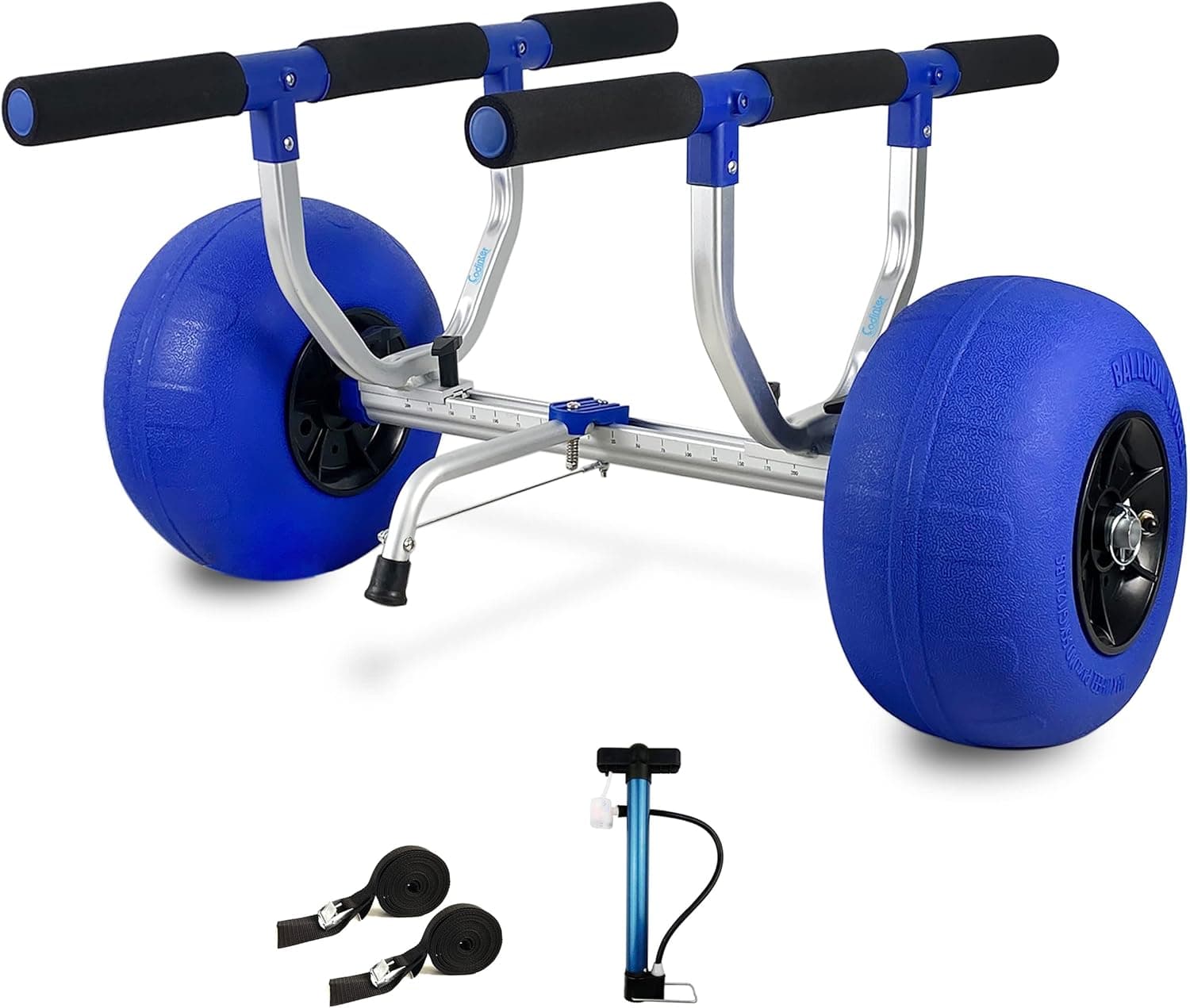
Codinter's heavy-duty beach kayak cart with 12 Inch balloon wheels and an adjustable width for different hulls.
Price range: See on Amazon
What we liked
- + 12 Inch balloon wheels float over soft sand
- + Width adjustable frame fits narrow and wide kayaks
- + Heavy-duty build suits loaded fishing kayaks
Trade-offs
- - Balloon wheels need inflation and occasional pressure checks
- - Larger wheels make the cart bulkier to store
What this cart is built for
Rolling a kayak across a parking lot is one thing, but dragging or carrying it across soft beach sand is another problem entirely, and that is the gap this cart is built to close. Codinter uses two 12 inch balloon wheels, low-pressure inflatable tires with a wide footprint that spreads the kayak's weight over more surface area than a narrow hard tire, letting the cart roll over sand instead of digging in and stalling. The frame is rated to carry up to 330 pounds, enough for most loaded fishing kayaks with gear aboard rather than just an empty recreational boat. At 15 pounds, the cart itself is light enough to carry to the water separately if you are not rolling a boat on it yet, and it breaks down into smaller pieces for storage in a car trunk or garage.
Materials and adjustability
The frame uses aviation-grade anodized aluminum, a lightweight but strong material choice that resists corrosion from saltwater and sand exposure better than uncoated steel would over repeated beach trips. Foam bumpers pad the arms that contact the kayak hull, protecting the boat's finish from scratches where the frame touches the hull during loading and transport. A width-adjustable design lets the frame open from about 5.5 inches up to 16.5 inches, which matters because narrow kayaks and wide fishing kayaks balance very differently on a cart, and getting the width matched to your hull's curve helps prevent the boat tipping sideways off the cart mid-roll. Two cinch straps are included to lash the kayak down once it is centered and balanced on the frame.
Living with it on beach trips
Balloon tires are the trade-off that comes with sand performance: they need to be inflated before first use and checked periodically, since a soft tire loses some of the flotation that makes it good on sand in the first place. A small hand pump or a standard bike pump works for topping them off, and most paddlers only need to check pressure every few trips rather than every time. The cart includes a kickstand, letting it stand upright on its own while you load or adjust straps rather than having to hold it steady or lay it flat in the sand. Because the wheels are larger than the hard, narrow tires found on pavement-only carts, the whole unit takes up more room broken down in a trunk or garage, a reasonable trade for the added flotation on soft ground.
Trade-offs and how it compares
Against other launch wheels in the same guide, the Bonnlo Kayak Cart Trolley also uses 12 inch balloon wheels and adds a free pump and ratchet straps in the box, while airless options like the VEVOR Beach Balloon Wheels or the TOURFUN Kayak Cart with no-flat airless tires trade a bit of sand flotation for never needing to check tire pressure at all. Anyone who paddles mostly from paved boat ramps rather than open beaches may find a simpler, narrower-wheeled cart lighter to store and just as effective, since the balloon tires' main advantage is specifically soft sand performance rather than smooth-surface rolling.
Who should buy it
This cart suits paddlers who regularly launch from sandy beaches where a standard narrow-wheeled cart would bog down, especially anyone with a heavier, gear-loaded fishing kayak that benefits from the 330 pound capacity and adjustable width. Paddlers who only ever launch from paved ramps or firm boat launches, where sand flotation is not a factor, may prefer a lighter, more compact cart with standard tires. Given our score of 8.4 out of 10, the combination of adjustable width, foam-padded arms and true beach-ready wheels makes this a solid pick for anyone whose put-in involves real sand rather than pavement.
Frequently asked questions
How much weight can the cart carry
Codinter rates the frame for up to 330 pounds, which covers most loaded fishing kayaks as well as lighter recreational boats.
Do the balloon tires need to be inflated
Yes, they are low-pressure inflatable tires that need air before first use and occasional pressure checks, unlike airless cart tires.
Can the cart width be adjusted for different kayaks
Yes, the frame adjusts from about 5.5 to 16.5 inches wide to match narrow and wide kayak hulls and help keep the boat balanced while rolling.
Does it work on pavement as well as sand
Yes, though the large balloon wheels are specifically an advantage on soft sand, a narrower-wheeled cart can be just as effective and more compact for paved boat ramps.
Prices change often, so check the current price and availability on Amazon.
Check price on AmazonKayak Nest may earn a commission from the link above.