Onyx M-16 Manual Inflatable Belt Pack - U.S. Coast Guard Approved, Low Profile Compact Design Review (2026)
Updated September 14, 2026 · Research-based review
Our verdict
The Onyx M-16 is a USCG-approved manual inflatable belt pack for paddlers who want a low-profile PFD that stays cool until needed. A pull-cord CO2 cartridge inflates it on demand and it weighs well under a pound, but manual activation means it does nothing until you pull the cord, and the cylinder needs inspection.
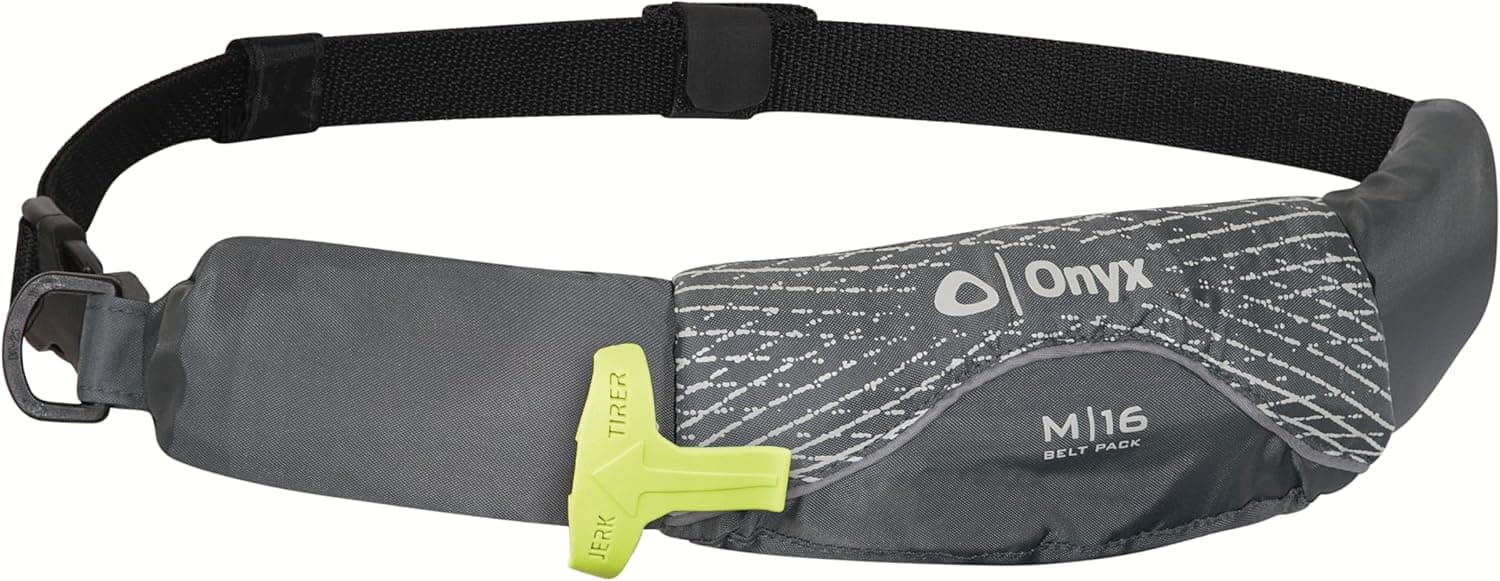
Onyx M-16 manual inflatable belt pack, U.S. Coast Guard approved with a low profile, compact design.
Price range: See on Amazon
What we liked
- + Title states U.S. Coast Guard approval for this belt pack
- + Low profile, compact design suits warm-weather paddling
- + Belt pack format avoids overheating under a foam vest
Trade-offs
- - Manual activation is required, so it does not inflate on its own
- - Cylinder and bladder need routine inspection over time
Who a manual inflatable belt pack suits
The M-16 trades the foam bulk of a standard PFD for a slim belt pack that rides around the waist until inflated, which is why it appeals most to warm-weather paddlers, stand-up paddleboarders and anglers who find a full foam vest too hot or restrictive for casual paddling. Because it requires a manual pull to inflate rather than inflating automatically on water contact, it is best suited to confident swimmers who can reliably pull the cord if they end up in the water, and it is approved for persons 16 years of age and older weighing over 80 pounds. Paddlers in cold water, rough conditions, or whitewater should choose a standard foam PFD instead, since those situations call for buoyancy that does not depend on a manual action.
How the CO2 inflation and low-profile design work
A 16 gram CO2 cartridge provides about 17 pounds of buoyancy when the wearer pulls the inflation handle, and an oral inflation tube can add buoyancy up to roughly 26.5 pounds if needed. The inflation handle clips to the pack to avoid snagging on gear while paddling, and the whole unit weighs well under a pound, which is the main appeal over a bulky foam life jacket for casual warm-weather use. The shell is 200 denier nylon oxford, chosen for abrasion resistance, and the pack adjusts with a body belt to fit chest sizes from roughly 30 to 52 inches and waist sizes up to 52 inches, so most adults can get a secure fit.
Living with an inflatable PFD
Because inflation is manual rather than automatic, the M-16 requires what Onyx calls secondary donning, meaning it must be worn correctly and the wearer must actively pull the cord in an emergency rather than relying on the device to inflate itself. That makes routine practice and comfort with the pull mechanism part of using it safely. After deployment, the spent CO2 cartridge needs replacing with Onyx's separately sold rearming kit before the pack can be used again, and manufacturers generally recommend periodically checking the cartridge and firing mechanism for corrosion or damage. Always follow Onyx's manual and US Coast Guard guidance for inspection intervals and proper wear rather than assuming it is maintenance-free.
Trade-offs against foam PFDs and other inflatables
Against a standard foam kayak PFD, the M-16's biggest advantage is comfort in hot weather and freedom of movement, since it does not sit against the torso until inflated, but it gives up the automatic protection and impact cushioning that foam provides. Compared with automatic inflatable PFDs that deploy on water contact, the M-16's manual design keeps it simpler and typically lighter, but it puts more responsibility on the wearer to activate it. Within Onyx's own lineup, other M-16 color and version variants share the same core CO2 and belt pack design, so the choice mostly comes down to color preference and price rather than functional differences.
Verdict and who should choose a different PFD
The M-16 earns its strong value score of 9 out of 10 for paddlers who want the lightest, coolest PFD option for calm, warm-weather kayaking, SUP or fishing where comfort matters as much as safety. It is not the right choice for whitewater, cold water, rough conditions or anyone who cannot reliably pull an inflation cord in an emergency, including non-swimmers and young paddlers, who should wear a standard foam PFD instead. Whichever you choose, check the US Coast Guard approval label and follow the manufacturer's fit and maintenance instructions rather than treating any PFD as set-and-forget safety gear.
Frequently asked questions
Does the Onyx M-16 inflate automatically in the water?
No, it is a manual inflatable, meaning the wearer must pull the inflation handle themselves; it does not inflate automatically on water contact like some other inflatable PFDs.
How much buoyancy does it provide?
The 16 gram CO2 cartridge provides about 17 pounds of buoyancy, and the oral inflation tube can add buoyancy up to roughly 26.5 pounds if topped off by mouth.
Who should avoid a manual inflatable PFD like this one?
Non-swimmers, young or inexperienced paddlers, and anyone paddling whitewater, cold water or rough conditions should choose a standard foam PFD instead, since it protects without requiring an action to activate.
What happens after the CO2 cartridge fires?
The spent cartridge must be replaced with Onyx's separately sold rearming kit before the pack can be used again, and the mechanism should be inspected periodically per the manufacturer's instructions.
Prices change often, so check the current price and availability on Amazon.
Check price on AmazonKayak Nest may earn a commission from the link above.