Werner Powerhouse Fiberglass Bent Shaft Whitewater Kayak Paddle Review (2026)
Updated September 21, 2026 · Research-based review
Our verdict
The Werner Powerhouse is a fiberglass whitewater paddle built for paddlers who want a stiff, durable blade and a bent shaft that reduces wrist strain on hard river strokes. It is priced well above aluminum recreational paddles, a cost that mainly pays off for regular whitewater paddlers.
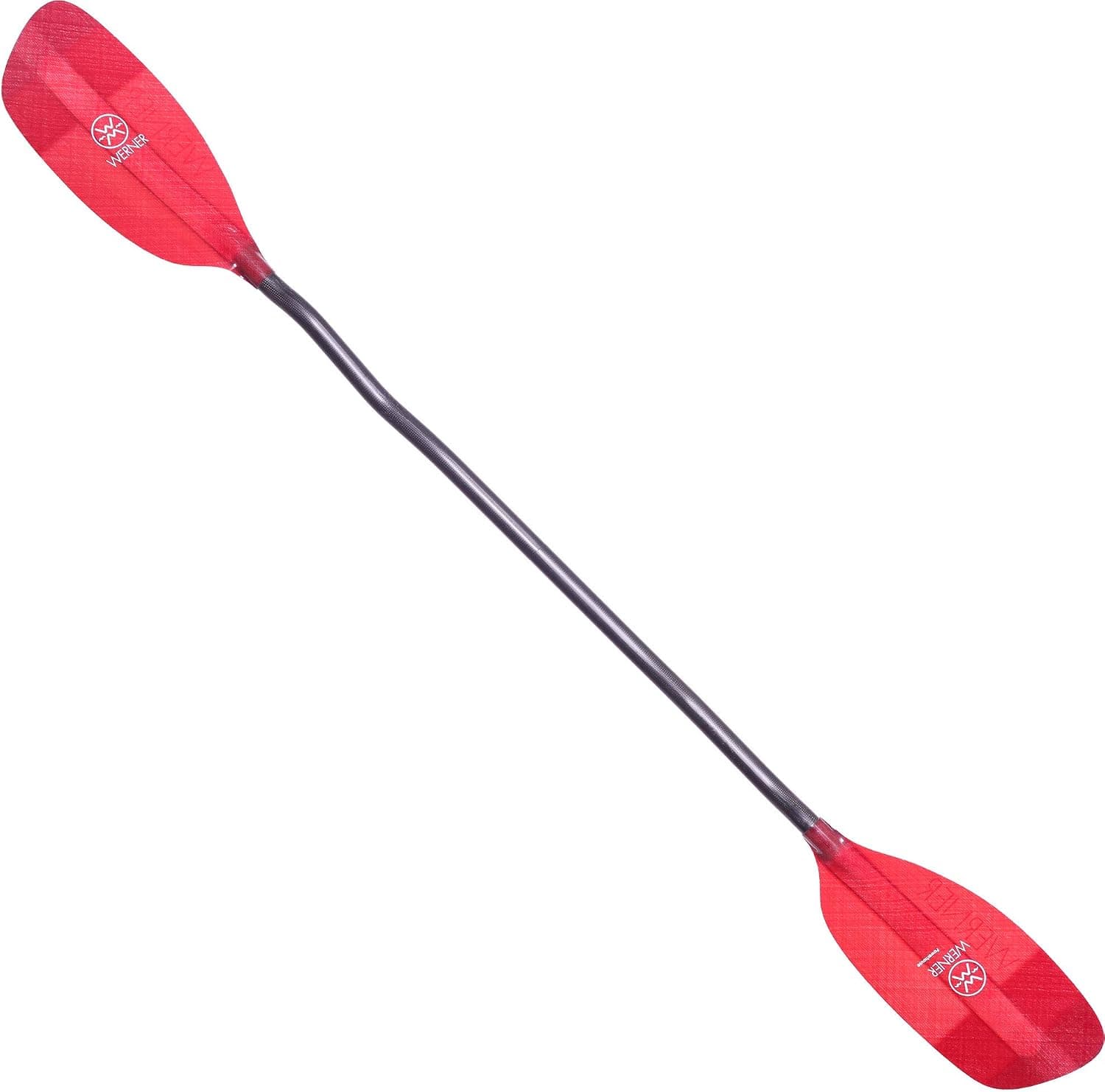
The Werner Powerhouse, a fiberglass bent shaft whitewater kayak paddle built for strong, reliable strokes on rivers.
Price range: See on Amazon
What we liked
- + Bent shaft angle reduces wrist strain during hard river strokes
- + Fiberglass construction balances stiffness with durability
- + Werner is one of the most respected names in whitewater paddles
Trade-offs
- - Whitewater blade shape is overkill for relaxed flatwater paddling
- - Premium price is several times that of aluminum rec paddles
Who the Powerhouse fits
Werner builds the Powerhouse as a river-running whitewater paddle, aimed at paddlers who need a stiff, powerful blade for punching through holes, ferrying across current and making quick correction strokes in moving water. The full-sized fiberglass blade favors larger paddlers or anyone who wants more blade surface to grab water on demand, which suits whitewater kayakers running class III and above more than casual flatwater paddlers. Werner is one of the most established names in whitewater paddle building, and the Powerhouse sits in its lineup as a premium performance option rather than an entry-level paddle, so it fits paddlers ready to invest in gear built specifically for river conditions.
Blade and shaft construction
The blade uses a dihedral, asymmetrical fiberglass design with a custom low-profile reinforcement spine, measuring about 48 by 20 centimeters with roughly 720 square centimeters of surface area, and Werner builds it as a single-piece paddle rather than a two-piece breakdown design. The shaft is a neutral bent shape made from fiberglass, meaning the blade, ferrule and grip stay in a straight line so the paddle feels similar to a straight shaft in the hand while still delivering the ergonomic benefit of a bend. Werner offers the Powerhouse in 194, 197, 200 and 203 centimeter lengths, with a choice between 30-degree and 45-degree blade feather angles depending on paddling style.
Why the bent shaft matters
A bent shaft angles the grip sections relative to the blade so a paddler's wrist stays in a more neutral position through each stroke, rather than bending sharply the way it does on a straight shaft during hard, repeated whitewater strokes. Over a full day of river paddling, that reduced wrist strain can meaningfully cut down on fatigue and the kind of repetitive strain some paddlers develop from straight shafts. The trade-off is a fixed feather angle and a paddle that some flatwater paddlers find less versatile than a straight shaft, since the ergonomic benefit is most noticeable during the powerful, frequent strokes whitewater paddling demands rather than relaxed cruising.
Where it is not the right fit
The whitewater blade shape on the Powerhouse is built for aggressive, powerful strokes in moving water, which makes it more paddle than most flatwater or relaxed recreational paddlers need for cruising a calm lake or slow river. Its price sits well above aluminum recreational paddles, several times higher in some comparisons, a gap that mainly makes sense for paddlers who use their paddle often enough in real whitewater conditions to benefit from the lighter swing weight and stiffness fiberglass construction provides over aluminum. Casual or occasional paddlers who mostly stick to calm water are better served by a simpler, less expensive aluminum-shaft paddle.
Verdict and how it compares
The Werner Powerhouse earns a site score of 8.0 out of 10 and ranks first of seven in the best kayak paddles guide, ahead of aluminum options from Pelican and Sevylor that score lower on the same list. Its case is strongest for whitewater paddlers who want a durable, stiff fiberglass blade and a bent shaft that eases wrist strain on hard river strokes, and who paddle often enough to justify a premium price. Paddlers who mostly stay on calm water, or who want to spend less on a paddle used only occasionally, should compare it against the lower-priced aluminum paddles ranked below it in the same guide.
Frequently asked questions
What is the Powerhouse blade made from?
A dihedral, asymmetrical fiberglass blade with a low-profile reinforcement spine.
What lengths is the Powerhouse available in?
Werner offers it in 194, 197, 200 and 203 centimeter lengths.
What does a bent shaft do?
It keeps the wrist in a more neutral position during strokes, which can reduce fatigue and strain over a full day of paddling.
Is this paddle good for calm flatwater paddling?
It is built for whitewater river running; calm-water paddlers are typically better served by a simpler, less expensive paddle.
Prices change often, so check the current price and availability on Amazon.
Check price on AmazonKayak Nest may earn a commission from the link above.